
London has one principal devolved adult skills commissioner, the Greater London Authority (GLA), but many routes into delivery. Its 32 boroughs and the City of London, four subregional partnerships, colleges, independent providers and sector networks each influence access to learners, employers and funded provision.
The commercial question is where your provision adds something the existing system needs. A strong London proposition specifies the occupation, neighbourhoods, employer commitments and progression route. A broad promise to deliver across the capital gives a buyer much less to work with.
In this article
One funding centre, four subregions, 33 local relationships
The GLA controls devolved Adult Skills Fund (ASF) commissioning and Skills Bootcamps for Londoners. London entered its first integrated settlement in the 2026/27 financial year. This brings greater flexibility across specified programmes, while delivery still depends on the relevant grant agreement, funding rules and agreed outcomes.
BusinessLDN is the designated employer representative body for the London Local Skills Improvement Plan (LSIP). The approved July 2026 plan covers 2026 to 2029 and is jointly owned with the GLA. Central London Forward, Local London, South London Partnership and West London Alliance provide the subregional layer. They are particularly important for employment support and employer connections.
Read this geography in three parts: who commissions the provision, where eligible learners live, and where employers recruit. These boundaries can differ. A college outside Greater London can appear in a GLA allocation list because it serves London residents; an institution's postcode does not define its funded market.
Funding geography / routes to market
Start with the commissioner, then define the catchment.
01 / Commissioning geography
ASF and London Talent Pathways
Route to understandTalent Pathways applications closed on 8th December 2025 through GLA OPS. Investigate commissioned delivery and permitted partnership opportunities; monitor subsequent GLA funding calls.
02 / Commissioning geography
Skills Bootcamps for Londoners
Route to understandAt the evidence cut-off, creative and engineering lots were open, with applications due by 5pm on 11th November 2026. Submission uses GLA OPS against the relevant lot specification and clarification timetable.
03 / Commissioning geography
Borough adult learning
Route to understandCheck adult learning commissioning and council procurement pages. Redbridge identifies London Tenders Portal/ProContract. Establish whether the service seeks delivery partners, subcontractors or a separately procured service.
04 / Commissioning geography
CtW
Route to understandEngage the relevant subregional partnership and employment service about referral and training needs. Local London's programme is live; programme participation is distinct from a procurement opportunity.
05 / Commissioning geography
Institutional and employer partnerships
Route to understandUse a specific programme or published delivery plan to establish the organisation's role. Discuss progression, specialist capacity and employer access before assuming a funding competition.
A £355.2 million baseline, with later programme decisions to track
London’s funding is large, but access depends on the route attached to each part. Established ASF delivery, Talent Pathways grants and targeted Bootcamp competitions create different entry points. For a new provider, the useful question is which commissioning decision remains open and what capability the GLA needs beyond its existing network.
The four original national settlement lines total £355,224,162 for financial year 2026/27. This is a baseline, rather than a complete statement of subsequent programme decisions. September’s revised Bootcamps workstream is shown separately below; it includes the original Bootcamp funding and must not be added in full to that baseline.
Connect to Work (CtW) has a separate £46,832,029 revenue allocation for that financial year. Skills capital, industry placements and teacher industry exchange also have distinct lines. Keeping these visible helps identify the appropriate partnership conversation without treating every allocation as a course-delivery grant.
The GLA's published London Talent Pathways delivery plans show £35,084,100 of indicative planned funding for academic year 2026/27. This sits within the adult skills system and must not be added to the settlement subtotal. The workbook describes provider plans, rather than completed delivery or final expenditure. Financial-year allocations run April to March; the academic year runs August to July.
GLA: adult skills: original four-line baselineFinancial year 2026/27 · London ASF and Skills Bootcamps, including their separate construction additions£355,224,162
| Component | Amount | Period / scope |
|---|---|---|
| ASF including FCfJ | £338,703,290 | FY2026/27 revenue |
| ASF construction skills package uplift | £4,763,582 | FY2026/27 revenue |
| Skills Bootcamps | £8,963,257 | FY2026/27 revenue |
| Skills Bootcamps construction | £2,794,033 | FY2026/27 revenue |
Original national settlement components. Later Bootcamp and engineering decisions change programme resources; the September Bootcamps workstream below overlaps this baseline.
GLA: revised Bootcamps workstream: September 2026 programme updateFinancial year 2026/27 · Includes original Bootcamp funding and later additions; not additive to the baseline£16.841 million
| Component | Amount | Period / scope |
|---|---|---|
| Original Bootcamps including construction | £11,757,290 | Already within the £355,224,162 baseline |
| Additional Bootcamps award | £4,083,338 | Includes £168,745 construction |
| Engineering funding directed to Bootcamps | £1,000,000 | Transfer from the additional ASF engineering award |
| Revised workstream, published rounded total | £16.841 million | Director Decision DD2827, signed 22nd September 2026 |
Up to £1.25 million was identified for targeted new commissioning. The £1 million engineering transfer must not be counted again as separate ASF delivery funding.
GLA: CtW: Published programme allocationFinancial year 2026/27 · London supported employment, delivered through four subregional partnerships£46,832,029
| Component | Amount | Period / scope |
|---|---|---|
| CtW | £46,832,029 | FY2026/27 revenue |
Separate national integrated settlement line. Excluded from the adult skills subtotal. Subregional multi-year announcements must not be added to this annual London allocation.
GLA: additional skills capacity: Published individual settlement linesFinancial year 2026/27 · Capital, placements and workforce support, with distinct purposes and funding typesSeparate programme allocations
| Component | Amount | Period / scope |
|---|---|---|
| Project-based capital funding | £13,155,276 | FY2026/27 capital |
| Technical Excellence Colleges | £12,497,513 | FY2026/27 capital |
| Industry placements | £4,602,852 | FY2026/27 revenue |
| FE teacher industry exchange | £356,688 | FY2026/27 revenue |
National integrated settlement allocations. Shown separately to preserve programme scope and capital/revenue distinctions. They do not represent a single fund available to training providers.
The funding label has changed: understand the London Level 3 Offer
From 1st August 2026, the GLA's final ASF rules combine the previous Free Courses for Jobs (FCfJ) and Level 3 flexibilities into the London Level 3 Offer. The FCfJ ringfence is removed, while providers are still expected to prioritise Level 3 delivery. A targeted 10% London Priority Uplift applies to eligible full Level 3 qualifications in priority sectors and specified Level 2 construction, engineering and manufacturing qualifications.
The national settlement table retains the description 'ASF including FCfJ'. That is the funding allocation label; it is no longer a complete description of London's operational offer. Recheck qualification eligibility, learner circumstances, approved delivery plans and rates before transferring a programme model from another region. The opportunity is a coherent progression pathway, supported by the rules that apply in London.
The earnings threshold also changed during the funding year. For eligible learners starting on or after 15th October 2026, the GLA’s earnings test is below £15.45 an hour or below £30,127.50 in annual gross earnings. The earlier £14.80 rate applies to starts before that date. Apply the relevant income test alongside the course and residency rules, and keep evidence of the learner’s earnings and start date. London Talent Pathways job-outcome payments have separate requirements; do not treat the eligibility threshold as their payment test.
Six sector priorities, with digital capability and inclusion running through them
The 2026 to 2029 LSIP focuses on the built environment, creative industries, health and social care, hospitality, life sciences, and financial, business and professional services. Its cross-cutting concerns are digital, green and transferable skills, alongside labour market inclusion. Providers should connect a course to an occupational task and an entry or progression route, rather than relying on the sector label alone.
The plan calls for modular training, stronger employer involvement and more access to work experience. A practical response is to agree the tasks employers need performed, identify the training and supervised practice required, and confirm how learners will demonstrate competence. Digital and AI content should be embedded where it changes the job: design tools in construction, production workflows in creative businesses, or data handling in business services.
The SSA guide below is TA's curriculum mapping of these priorities. It helps providers interrogate their portfolio; qualification funding eligibility still needs to be checked separately. Employer demand often crosses several SSAs, particularly when technical training needs language, numeracy, digital confidence or supervisory skills alongside it.
Local Skills Improvement Plans / delivery implications
Translate the sector priority into an occupational offer.
Greater London
Employer representative body: BusinessLDN, working jointly with the GLA
Approved 2026 to 2029; report dated July 2026
Local priorities: Built environment · Creative industries · Health and social care · Hospitality · Life sciences · Financial, business and professional services
Build occupational pathways that combine technical competence with digital, green and transferable skills, supported by employer participation and accessible delivery.
Explore occupations, capabilities and delivery implications
| Priority | What this means for provision |
|---|---|
| SSA 5: Construction, Planning and the Built EnvironmentBuilt environment | Electrical, plumbing, inspection and site-management skills; retrofit and digital design capability. Link short upskilling to workplace competence and the credentials employers require. |
| SSA 9: Arts, Media and PublishingCreative industries | Production and specialist software skills, alongside commercial capability for freelancers. Build practical portfolios and employer access into creative pathways. |
| SSA 1: Health, Public Services and CareHealth and social care | Care workers, clinical and technical roles, digital systems and supervisory development. Match training to regulated entry requirements and progression within employers. |
| SSA 7: Retail and Commercial EnterpriseHospitality | Operational and supervisory capability, customer service and food safety. Design release patterns around shifts and reinforce progression beyond entry roles. |
| SSA 2: Science and MathematicsSSA 4: Engineering and Manufacturing TechnologiesLife sciences | Laboratory and regulatory competence, clinical-trial knowledge, project skills and data tools. Practical industry experience matters alongside academic knowledge. |
| SSA 15: Business, Administration and LawFinancial, business and professional services | Accounting, administration, analysis and digital tools alongside communication and management. Define the specific entry or progression role before selecting the qualification level. |
LSIP evidence to curriculum
A sector label becomes useful when it changes the course.
Building and construction; engineering
Construction and retrofit
5.2 Building and construction · 4.1 Engineering
Connect technical learning to site competence, employer credentials and a clear route into skilled work.
Performing arts; crafts, creative arts and design; media and communication
Creative production
9.1 Performing arts · 9.2 Crafts, creative arts and design · 9.3 Media and communication
Pair production skills with a portfolio, industry contacts and the commercial skills needed to sustain work.
Health and social care
Care and progression
1.3 Health and social care
Build progression from entry-level support into specialist and supervisory capability within real employers.
Hospitality and catering
Hospitality pathways
7.4 Hospitality and catering
Train for the working pattern as well as the job, with a credible step from entry roles into supervision.
Science; manufacturing technologies
Life sciences capability
2.1 Science · 4.2 Manufacturing technologies
Make laboratory, production or regulatory practice explicit so qualifications translate into workplace readiness.
Accounting and finance; administration; business management
Business and professional services
15.1 Accounting and finance · 15.2 Administration · 15.3 Business management
Select a defined occupational pathway and teach the analytical, communication and management tasks it requires.
Digital technology; foundations for learning and life; preparation for work
Digital and essential skills
6.1 Digital technology (practitioners) · 6.2 Digital technology (users) · 14.1 Foundations for learning and life · 14.2 Preparation for work
Embed digital confidence and essential skills in the pathway that learners and employers actually need.
TA crosswalk to Ofqual Sector Subject Areas. The qualification’s assigned SSA and the programme’s eligibility rules remain the classification reference.
A nearby vacancy is only useful if the learner can reach and sustain it
London's concentration of high-value jobs can obscure barriers to participation. The LSIP identifies gaps in inclusive pathways and English-language provision, while the Get London Working approach connects employment support with health and wider services. Borough averages should prompt neighbourhood investigation: the realistic recruitment catchment may be much smaller than the area shaded on a regional map.
Build the delivery model around travel costs, shift patterns, childcare, accessibility and digital access. For a resident preparing for hospitality or care work, the journey at an early start or late finish matters as much as the journey to a daytime classroom. Confirm this with employers and referral partners before setting cohort sizes.
Combine occupational learning with the support that makes progression possible. That may mean vocational ESOL, practical digital skills, supported introductions to employers or coordination with an employment specialist. Budget the permitted support, agree responsibilities and track sustained progression. The strongest inclusion proposition explains how a specific barrier will be removed.
English Indices of Deprivation 2025
Local disadvantage changes the delivery model.
4.0% of the region’s neighbourhoods are in England’s most deprived tenth: 201 of 4,994 LSOAs. The concentration differs substantially between council areas.
Compare all 33 council areas: exact counts and education deprivation
| Council area | All LSOAs | Overall IMD decile 1 | Education domain decile 1 |
|---|---|---|---|
| Haringey | 147 | 28 (19.0%) | 0 (0.0%) |
| Enfield | 183 | 33 (18.0%) | 15 (8.2%) |
| Hackney | 149 | 24 (16.1%) | 3 (2.0%) |
| Brent | 181 | 28 (15.5%) | 2 (1.1%) |
| Tower Hamlets | 169 | 22 (13.0%) | 0 (0.0%) |
| Westminster | 123 | 11 (8.9%) | 0 (0.0%) |
| Newham | 185 | 10 (5.4%) | 0 (0.0%) |
| Islington | 126 | 5 (4.0%) | 0 (0.0%) |
| Croydon | 229 | 8 (3.5%) | 0 (0.0%) |
| Camden | 130 | 4 (3.1%) | 0 (0.0%) |
| Ealing | 199 | 6 (3.0%) | 0 (0.0%) |
| Kensington and Chelsea | 101 | 3 (3.0%) | 0 (0.0%) |
| Hounslow | 150 | 3 (2.0%) | 0 (0.0%) |
| Redbridge | 164 | 3 (1.8%) | 0 (0.0%) |
| Barking and Dagenham | 115 | 2 (1.7%) | 0 (0.0%) |
| Hammersmith and Fulham | 115 | 2 (1.7%) | 0 (0.0%) |
| Lewisham | 175 | 3 (1.7%) | 0 (0.0%) |
| Sutton | 123 | 1 (0.8%) | 1 (0.8%) |
| Havering | 153 | 1 (0.7%) | 1 (0.7%) |
| Waltham Forest | 146 | 1 (0.7%) | 0 (0.0%) |
| Lambeth | 181 | 1 (0.6%) | 0 (0.0%) |
| Barnet | 220 | 1 (0.5%) | 0 (0.0%) |
| Bromley | 199 | 1 (0.5%) | 0 (0.0%) |
| Bexley | 148 | 0 (0.0%) | 0 (0.0%) |
| City of London | 6 | 0 (0.0%) | 0 (0.0%) |
| Greenwich | 164 | 0 (0.0%) | 0 (0.0%) |
| Harrow | 144 | 0 (0.0%) | 0 (0.0%) |
| Hillingdon | 170 | 0 (0.0%) | 1 (0.6%) |
| Kingston upon Thames | 99 | 0 (0.0%) | 0 (0.0%) |
| Merton | 126 | 0 (0.0%) | 0 (0.0%) |
| Richmond upon Thames | 115 | 0 (0.0%) | 0 (0.0%) |
| Southwark | 173 | 0 (0.0%) | 0 (0.0%) |
| Wandsworth | 186 | 0 (0.0%) | 0 (0.0%) |
Each measure uses its own national ranking. These are neighbourhood shares, not population poverty rates or assessments of individual learners. A zero does not mean an absence of disadvantage.
TA calculations from corrected MHCLG IoD2025 File 7 and ONS 2024 authority geography. 4,994 neighbourhoods (2021 LSOAs) in this region. Contains OS data and National Statistics data © Crown copyright and database right 2026.
Two immediate distinctions: a closed ASF competition and targeted Bootcamp lots
London Talent Pathways closed to applications at 5pm on 8th December 2025. The current route is delivery and partnership development around the commissioned programme, alongside monitoring future GLA commissioning. Its published provider plans make it possible to investigate who intends to deliver which qualifications and occupations. Use that intelligence to identify a useful complement to an existing provider's offer.
The GLA’s approach combines selective continuation with targeted new commissioning. Its original annual Bootcamp allocation fell from £29.994 million in 2025/26 to £11.757 million in 2026/27, putting proven provision first. September funding decisions raised the workstream to £16.841 million. Continuation remained performance-led, rather than an automatic extension for every Wave 6 provider. The GLA considered a large open competition impractical within the remaining delivery window, while allowing up to £1.25 million for targeted new commissioning, including creative and engineering priorities. The current lots develop that approach rather than reverse it.
At the 21st October 2026 evidence cut-off, the GLA advertised creative Bootcamp lots for rigging and technical crew, production sewing machinists and costume technicians, each with £125,000 available. An engineering and manufacturing lot had £450,000 available, capped at £150,000 per Bootcamp. Applications were due through GLA OPS by 5pm on 11th November 2026. These lots sit within the revised Bootcamps workstream.
The wider Bootcamps approach prioritises continuation for proven providers, employer-led commissions and growth where performance supports it. New entrants need a specific employer problem, a deliverable cohort and convincing outcome evidence. During engagement, ask which occupations remain underserved, what employers will commit, how performance is judged and what capacity gaps the buyer wants to address.
Employment support can determine whether your training reaches the right people
CtW is delivered across London through the four subregional partnerships. It supports people with disabilities, health conditions or other complex barriers to employment. Local London's programme is live through its nine boroughs and explicitly seeks collaboration with training providers, employers, health services and Jobcentre Plus.
For a training provider, this creates a practical relationship to develop: who identifies a skills need, who supports the participant, who engages the employer and who follows up after recruitment? Offer training that fits the individual's employment plan. Do not assume that an employment support allocation is automatically available for a standalone course contract.
Apprenticeships, employer-funded training and institutional partnerships also matter to London's market. Assess them alongside adult skills commissioning, with their own funding and delivery requirements. A university, college or regeneration organisation may be a partner, customer or competitor depending on the programme. Record the role before adding it to your buyer pipeline.
LLDC and LSBU show why the institutional layer matters
The London Legacy Development Corporation (LLDC) is the organisation responsible for Queen Elizabeth Olympic Park. Its skills relevance includes creative-sector access and employer partnerships around the Park and East Bank. A June 2026 announcement with ABBA Voyage described expanded mentoring, technical-production apprenticeships and an Autumn School, working with partners including Good Growth Hub. This is evidence of a specific employer pathway; the announcement does not establish an ASF or Bootcamp competition.
London South Bank University (LSBU) is an education and employer partner. Its February 2026 group strategy connects South Bank Colleges, university study and employment pathways. South Bank Colleges also appears in the GLA's current London Talent Pathways plans for construction and health and social care. For providers, the useful question is where specialist provision, employer access or progression arrangements could strengthen an established pathway.
The borough directory is a delivery map as well as a buyer map
The four groupings below cover all 33 local authority areas and follow the GLA's CtW geography. Borough adult learning services can receive GLA funding, deliver provision directly, work with partners and commission particular services. Borough employment teams can also influence referrals and employer access. These roles should be investigated separately.
Hackney, Harrow, Redbridge, Wandsworth and the City of London appear in the published 2026/27 London Talent Pathways delivery plans. Other boroughs appear in the GLA's indicative ASF grant allocations. A provider should therefore monitor the GLA programme pages and the relevant council's adult learning, employment and procurement pages. Redbridge, for example, identifies London Tenders Portal/ProContract as a contracting route.
Buyer and delivery geography
Find the lead. Build the local delivery relationships.
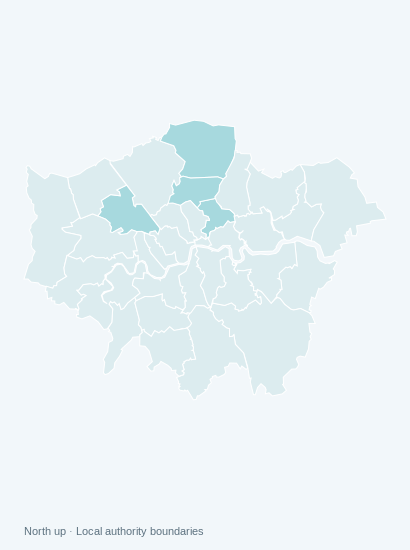
Choose a shaded area or a commissioning geography below to see the programme lead and local council network.
Select a numbered area
Selected geography
Central London Forward
- Programme lead
- GLA: ASF and Bootcamps. Central London Forward: subregional Connect to Work.
- Delivery and access
- Central London Connect to Work geography. Investigate borough employment services, adult learning and employer partnerships alongside the GLA funding route.
- Local council network
- Camden · City of London · Hackney · Haringey · Islington · Kensington and Chelsea · Lambeth · Lewisham · Southwark · Tower Hamlets · Wandsworth · Westminster
Complete directory: 33 council areas
| Council area | Upper-tier area | Commissioning geography |
|---|---|---|
| Barking and Dagenham | Barking and Dagenham | Local London |
| Barnet | Barnet | West London Alliance |
| Bexley | Bexley | Local London |
| Brent | Brent | West London Alliance |
| Bromley | Bromley | Local London |
| Camden | Camden | Central London Forward |
| City of London | City of London | Central London Forward |
| Croydon | Croydon | South London Partnership |
| Ealing | Ealing | West London Alliance |
| Enfield | Enfield | Local London |
| Greenwich | Greenwich | Local London |
| Hackney | Hackney | Central London Forward |
| Hammersmith and Fulham | Hammersmith and Fulham | West London Alliance |
| Haringey | Haringey | Central London Forward |
| Harrow | Harrow | West London Alliance |
| Havering | Havering | Local London |
| Hillingdon | Hillingdon | West London Alliance |
| Hounslow | Hounslow | West London Alliance |
| Islington | Islington | Central London Forward |
| Kensington and Chelsea | Kensington and Chelsea | Central London Forward |
| Kingston upon Thames | Kingston upon Thames | South London Partnership |
| Lambeth | Lambeth | Central London Forward |
| Lewisham | Lewisham | Central London Forward |
| Merton | Merton | South London Partnership |
| Newham | Newham | Local London |
| Redbridge | Redbridge | Local London |
| Richmond upon Thames | Richmond upon Thames | South London Partnership |
| Southwark | Southwark | Central London Forward |
| Sutton | Sutton | South London Partnership |
| Tower Hamlets | Tower Hamlets | Central London Forward |
| Waltham Forest | Waltham Forest | Local London |
| Wandsworth | Wandsworth | Central London Forward |
| Westminster | Westminster | Central London Forward |
District and borough boundaries follow ONS December 2024 geography. Programme leads are described separately from councils that help recruit, support and connect learners. London colours show CtW partnerships; the GLA skills geography covers all 33 areas. Contains OS and National Statistics data © Crown copyright and database right 2026.
Use planned provision to find overlap and gaps
London's market contains large college groups, specialist independent providers, borough services and community organisations. The London Talent Pathways workbook is particularly useful because it identifies planned sectors, learning aims and target occupations by provider. The selected examples below are evidence of planned provision in 2026/27; they do not rank provider quality, delivery performance or market share.
Compare competitors at the level a buyer or employer experiences: occupation, qualification level, locality, timetable, learner support and employer relationships. Two providers may both teach digital skills yet serve very different learners and jobs. A credible gap analysis should explain the missing progression step or delivery constraint, then demonstrate demand for solving it.
Established grant-funded colleges remain important beyond this commissioned programme. The GLA's indicative 2026/27 allocation list includes New City College, Barnet and Southgate College, Waltham Forest College, HRUC, United Colleges Group, South Thames Colleges Group and The WKCIC Group. Treat these as organisations to research for competition and partnership, rather than assuming the indicative allocations are their final contract values.
Selected London Talent Pathways provider plans, academic year 2026/27
| Provider | Planned sectors in the published workbook |
|---|---|
| Capital City College Group | Experience economy, digital, creative and construction |
| South Bank Colleges | Construction; health and social care |
| Big Creative Training Ltd | Creative industries and technologies |
| Just IT Training Ltd; Netcom Training | Digital |
| Aim2Learn Ltd | Digital, including planned telecoms installer qualifications |
| Specialist Trade Courses; The Skills Centre London Ltd | Construction |
| Intertrain UK Ltd | Construction |
| Rinova Ltd | Experience economy and creative industries |
| ELATT | Experience economy, digital, health and social care |
| AKG (UK) Learning Ltd | Health and social care |
| Runway Apprenticeships Ltd | Experience economy, construction, care and life sciences |
| I & F Limited | Health and social care; life sciences |
| Hackney London Borough | Experience economy, creative, construction and care |
| London Borough of Harrow | Financial and business services; care; other provision |
| Redbridge Institute, Redbridge London Borough Council | Health and social care |
| City of London Corporation | Experience economy, digital and construction |
| Wandsworth London Borough Council | Experience economy, construction, care and other provision |
GLA London Talent Pathways Delivery Plans 2026/27, published through London Datastore. Provider plans are indicative and provisional. Names follow the workbook; listed sectors do not establish completed delivery, open subcontracting or market share.
Turn the London picture into a focused market plan
Choose a defined employer problem and delivery catchment, then build the evidence that connects them. Five useful actions follow.
- Select one occupational pathway and map its qualifications, entry requirements, employer demand and progression steps against the current LSIP.
- Check the London Level 3 Offer and the relevant programme rules before costing provision. Separate financial-year allocations from academic-year delivery plans.
- Use published Talent Pathways plans to shortlist potential partners and investigate where your provision would fill a demonstrable gap.
- Meet the relevant borough employment service and subregional partnership. Agree how referrals, learner support and employer introductions could work in practice.
- Monitor GLA funding lots and council procurement pages. Capture deadlines, clarification dates and the exact grant route; revisit the pipeline when a window closes.
TA view: London rewards a precise pathway, backed by local relationships
London's funding scale is attractive, but the strongest proposition is usually specific: a defined learner group, a reachable employment opportunity and a training pathway that existing partners can use. Start with that relationship, establish the funding route and demonstrate the missing capability. That creates a more convincing case for commissioning, partnership and sustainable growth.
Sources and scope
Evidence checked on 21st October 2026 against the July 2026 London LSIP, current national integrated settlement table, GLA funding rules and programme pages, published delivery plans and named institutions' statements. Settlement figures are allocations, Talent Pathways figures are indicative plans, and older indicative grant allocations are labelled. Opportunity dates describe the position at this cut-off. SSA links are TA's interpretation. The 21st October update also incorporates dated TA correspondence and buyer-issued procurement material where identified in the article; individual contacts and client identities are omitted. Targeted update on 23rd October 2026: the London ASF earnings threshold and its learner-start-date rule were checked against the current GLA funding rules. This does not represent a new full review of the fact file.
Continue the thinking
England’s skills sectors
Compare the national picture across all 15 subject areas.
What makes local delivery credible?
Turn your chosen geography into a convincing delivery case.
Shape the opportunity before the tender
Use buyer engagement to test and strengthen your proposition.